This guide is for buyers considering the 4th Taizhou Optical Fair (TOF), 18–20 October 2026, and the Duqiao production and trading cluster around it. It is not a report from the 2026 floor. The sourcing report from that visit will be written afterwards, and it is not published yet.
It is written for overseas eyewear brands, product developers, importers, distributors and professional buyers. The point is not that the fair is large. It is to decide which buying task the trip can serve, where to spend the time, and what still has to be asked before you leave a booth.
Four kinds of material are kept apart below: this year’s organiser information, earlier published reporting, Jay’s observations from previous visits, and preparation advice from CHAN ISSUE. An observation from an earlier year is not a 2026 fact. A promotional figure is not a count CHAN ISSUE has verified.
Start with the buying task, not the floor area
Exhibition area, exhibitor counts and a full sample wall do not, by themselves, tell you whether TOF is worth the trip. For a buyer with a defined task, Duqiao’s production, components and trading activity are part of the same decision.
Use the guide to answer three questions before you book the days:
- Does this fair match the product and the kind of supplier you are looking for?
- Once you are there, which areas and which kinds of company deserve the time?
- Beyond the fair, is there a reason to book a permanent shop, a company showroom, or a factory meeting?
Arrive with a task, then choose the area, the type of company, and the questions that have to be clear before you leave the booth.
What has been collected about TOF 2026
The fair, dates, venue, address, organiser, admission and opening hours are confirmed for 2026. The scale line is still a promotional claim, not a CHAN ISSUE count of who attends.
| Item | Collected information | Label |
|---|---|---|
| Fair | 4th Taizhou Optical Fair (TOF) | Verified |
| Dates | 18–20 October 2026. Not a one-day event on 18 October. | Verified |
| Venue | China · Duqiao Glasses City | Verified |
| Address | 777 Huancheng North Road, Duqiao Town, Linhai, Taizhou, Zhejiang, China | Verified |
| Organiser | Taizhou Eyewear Chamber of Commerce | Verified |
| Admission | Free admission. On arrival, scan and fill in your details to enter. | Verified |
| Hours | 09:00–17:00 each day. | Verified |
| Scale | Promotional material cites about 30,000 square metres, more than 300 exhibitors, and six themed halls. These are pre-show claims, not a CHAN ISSUE count of who actually attends. | Not verified |
What the 2026 organiser plans show
The two drawings below are the organiser’s plans for 2026. Reading them is not the same as walking the floor. They do not show six separate buildings. Halls A–D are areas of one complex. Outdoor areas E and F sit outside that block.
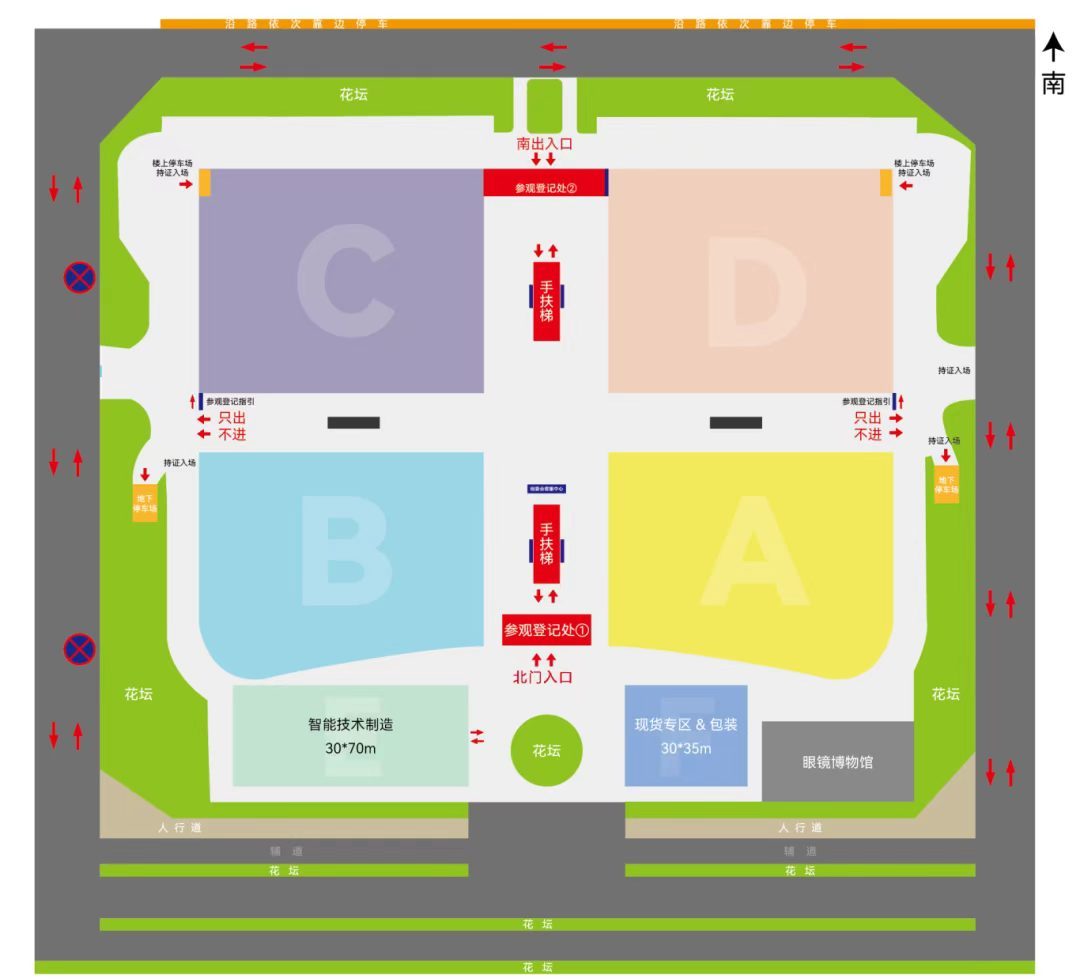
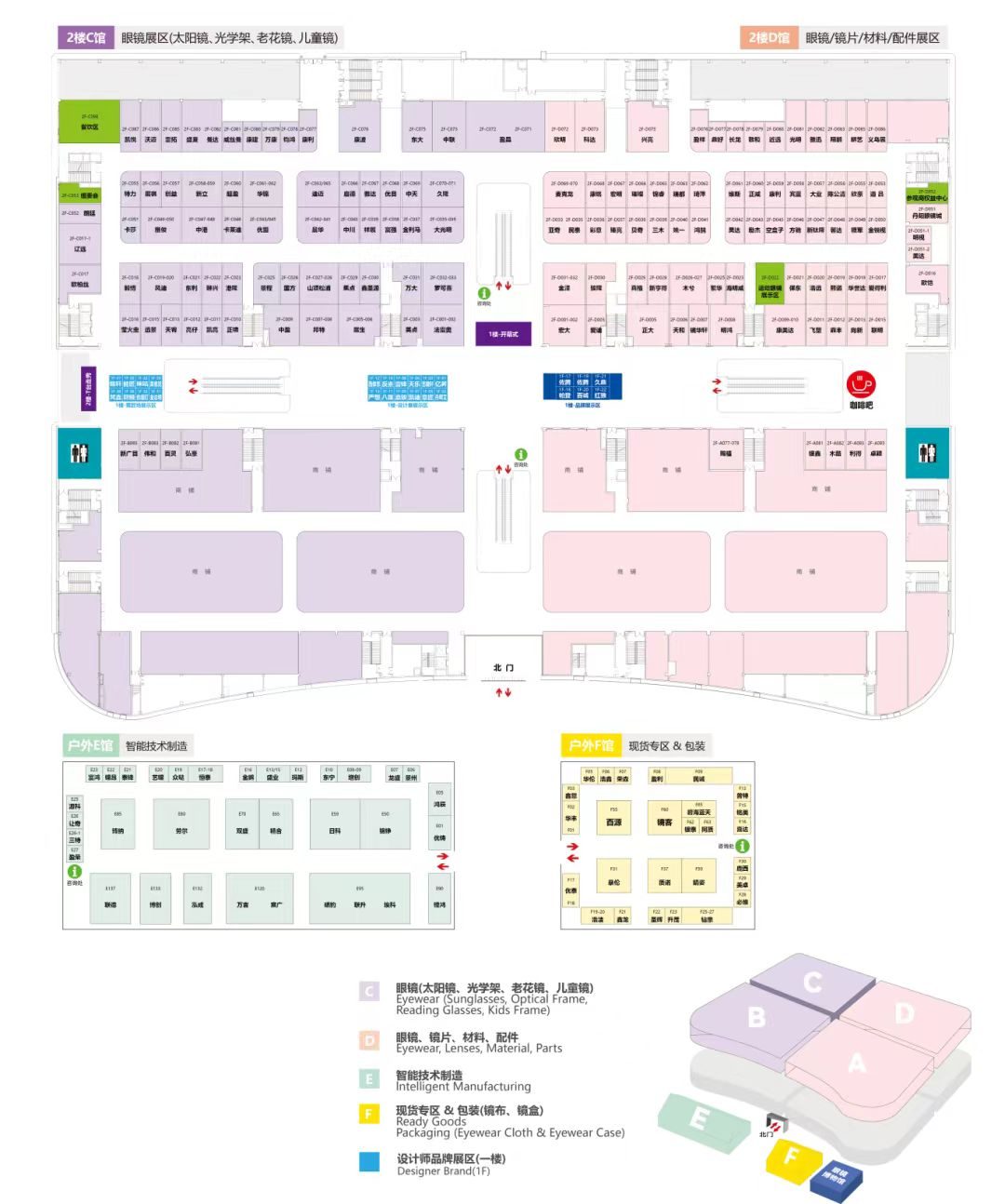
Halls A and B appear on the site plan. This guide does not assign them product categories, because the legend does not. Booth numbers, entrances and routes for 2026 should be taken from the edition’s own map, not from a previous visit.
Why the trip is also about Duqiao
Duqiao is the fair’s venue and a concentration of eyewear making, components and trading. Collected industry descriptions cover design, finished eyewear, frames, lenses, parts, manufacturing equipment and sales. A fair trip can therefore continue into the production and supply system behind a product — if that is what the buying task requires.
Not verified Reporting gathered as 2025 coverage says Duqiao has more than 1,000 eyewear supporting businesses and an industry scale above RMB 7 billion. Those are not CHAN ISSUE counts. The original article, the statistical year and the method still need to be checked. “Supporting business” does not mean each firm can make a complete pair of glasses, export directly, or supply a particular market.
The reason to include Duqiao is not that a production town automatically offers the lowest price. It is that one buying task can be followed through the product, the company, and the related production steps.
A pair of sunglasses that looks relevant on the stand is the start of that check: who makes it, which steps that company does itself, which steps are sent out, and whether a showroom or factory meeting is worth booking. Extra visits depend on the task and on a confirmed appointment. They are not a route every buyer should take.
Fair, shops and factories answer different questions
| Visit | Main task | Leave with |
|---|---|---|
| Fair booth | Compare product direction, make a contact, and get a first view of supply and development terms. | A note that ties the company to the style number, plus the contact, the first commercial conditions, and the questions still open. |
| Permanent shop or company showroom | See the range, and separate stock, wholesale, modifications and custom work. | A clearer view of where the product comes from, how it is supplied, and where the cooperation stops. |
| Factory, booked ahead | Look at the steps that matter for a specific product, and check the points already discussed. | A better picture of how work is divided, how samples are developed, how quality is checked, and how delivery is arranged. |
Do not treat a shop as a factory. Do not treat an exhibitor badge as proof that every process on the sample was done in-house. A manufacturer and a trading company are not “good” and “bad”. What matters is the role the company actually takes, the service it can provide, and whether that arrangement fits the order.
Separate the permanent market from the fair, using earlier visits
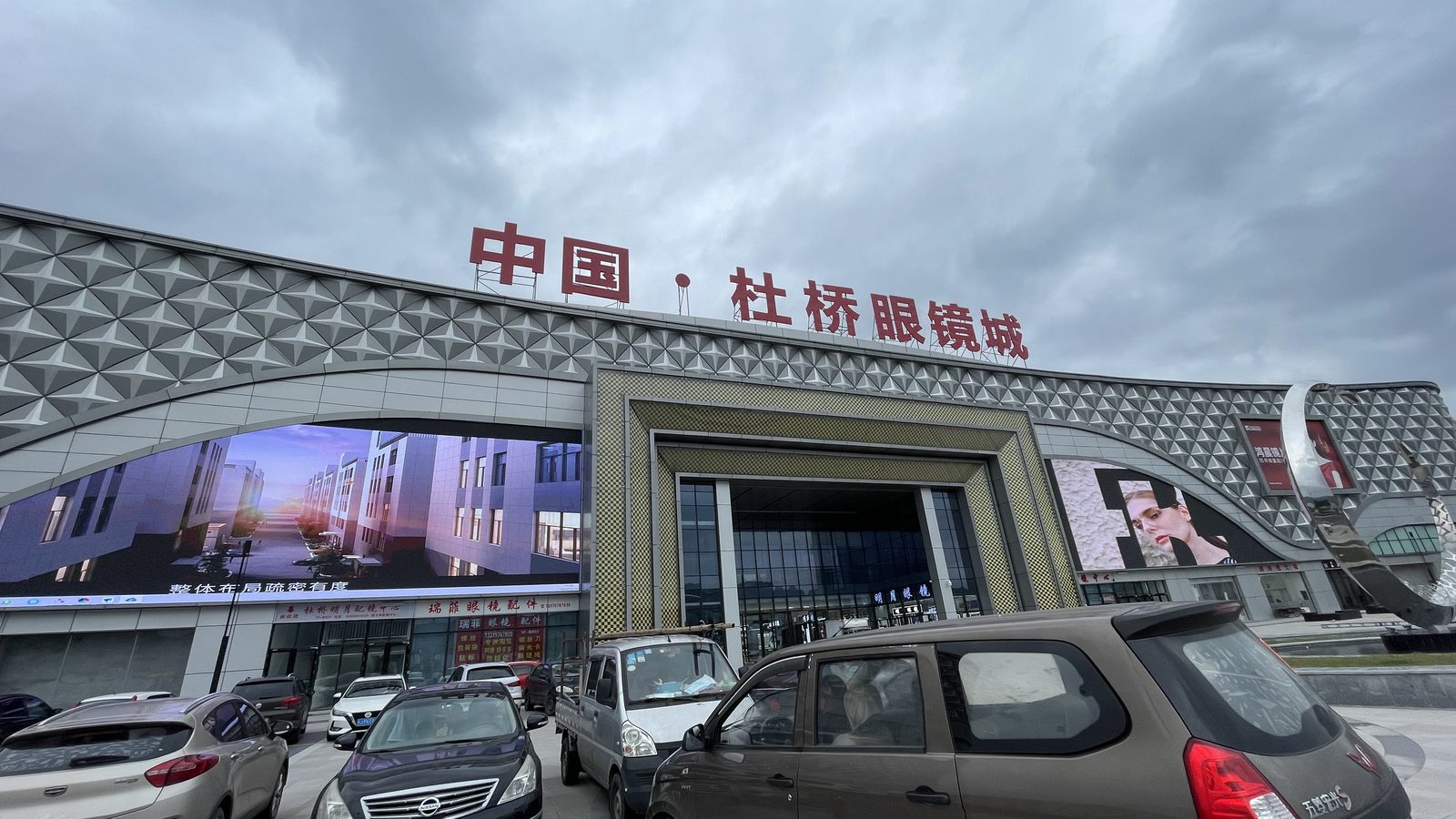
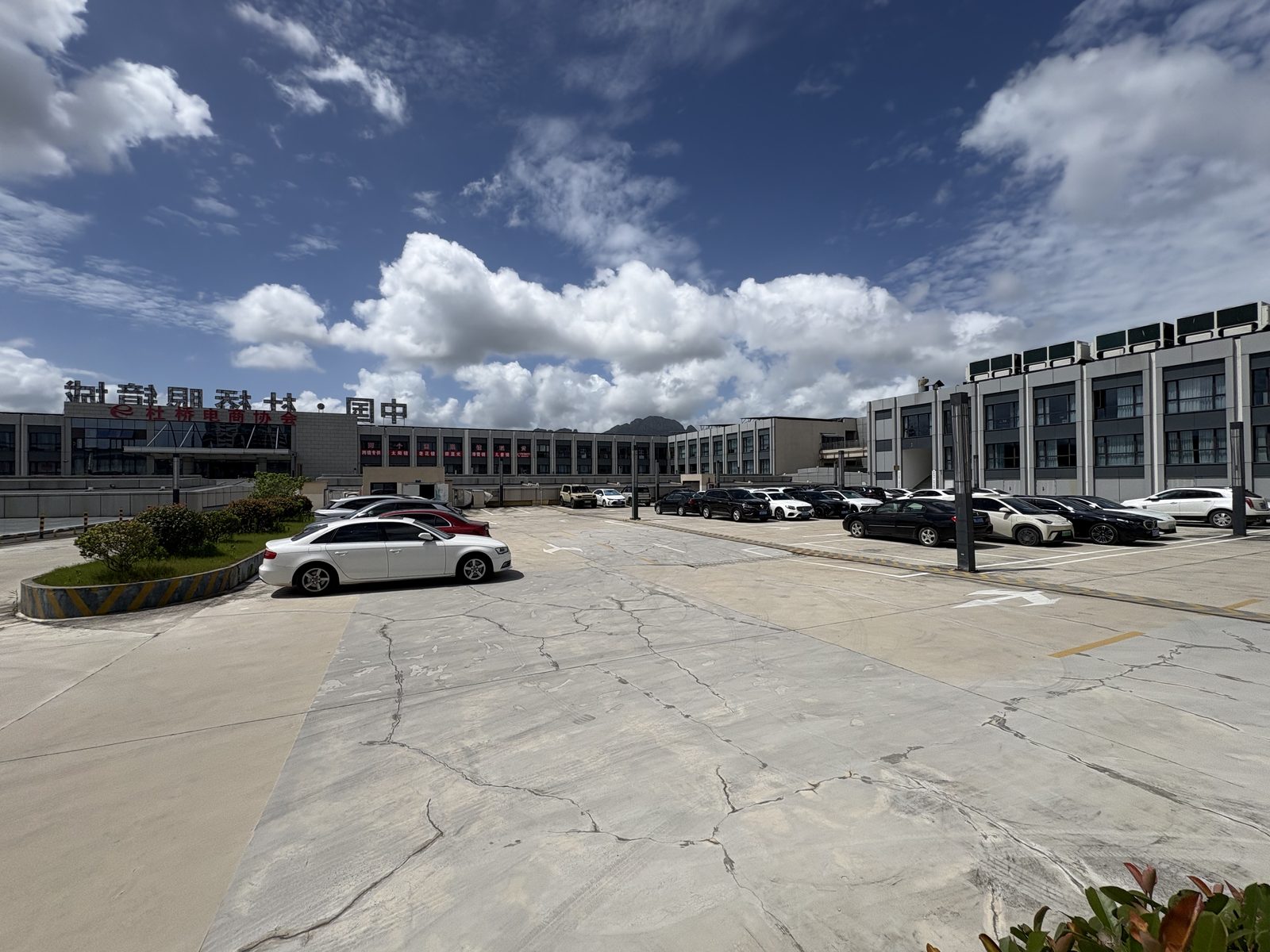
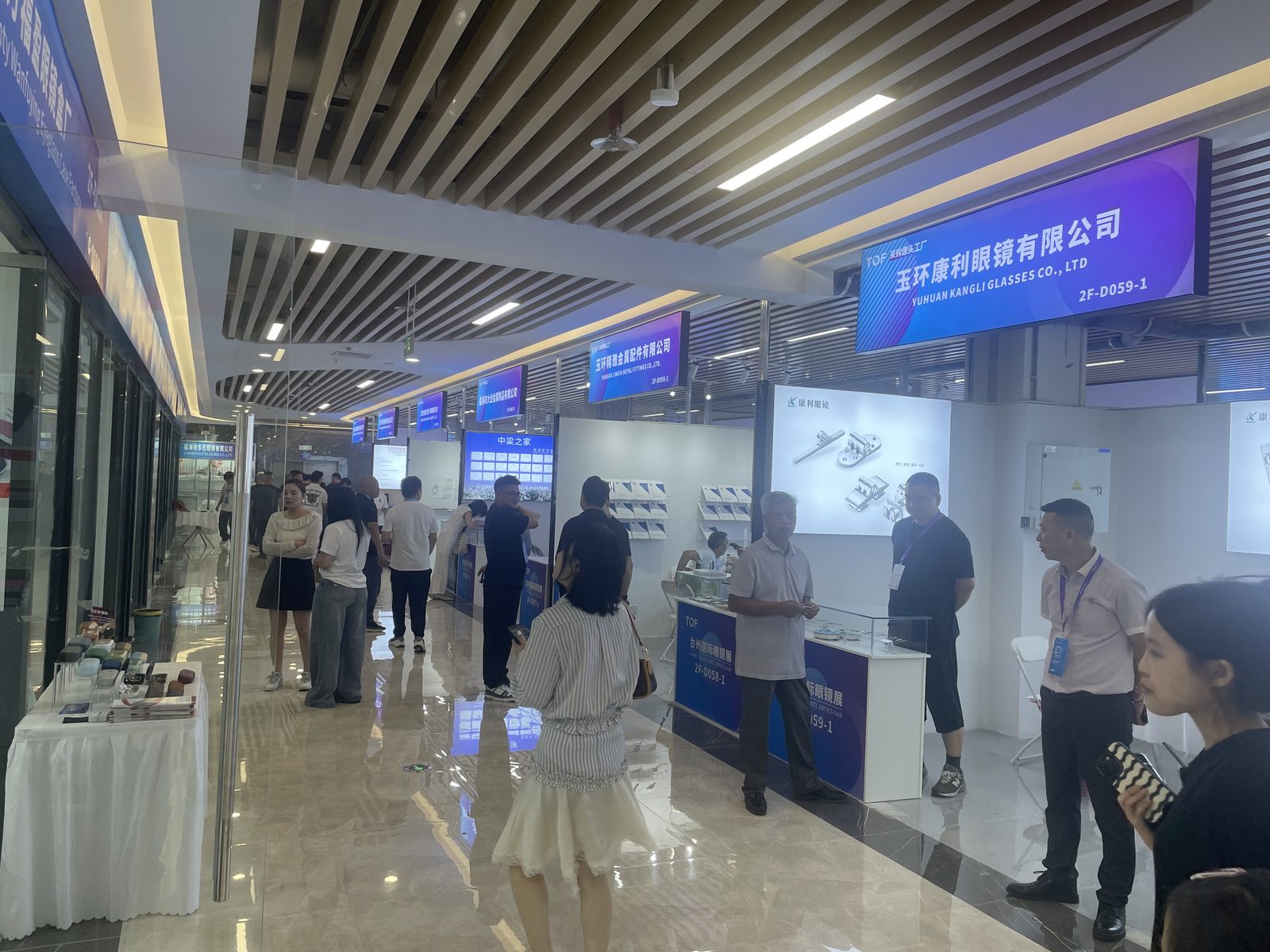
Jay visited on 30 November 2022, 18 October 2025, and 10 July 2026. The account below is what he saw then. It is not a plan of the 2026 fair, and none of the photographs is from the October 2026 show.
On the visits he is describing, the first floor of Duqiao Glasses City was a long-running retail market. Part of the second floor — shop units that were not let as permanent stores — was used as fair space. The square also had a display area for eyewear machinery and related equipment. He saw local factories and trading companies of some scale. That is one visitor’s observation. It does not describe the share of local firms, or of factories versus traders, among this year’s exhibitors.
The practical point is to tell three things apart: permanent shops, exhibitors who are there for the fair, and the equipment display. Staying on the first floor can miss the fair. Someone buying equipment needs the location and the company list for that area, not an assumption that it sits inside the eyewear halls.
The shop-unit form of the fair is worth describing as it is. It does not need to be rewritten as a conventional exhibition centre, and the shape of the space does not prove what a company can produce or deliver. Floors, gates, booth numbers, the equipment area and the walking route for 2026 come from this year’s materials, not from the photographs below.
Product directions are a filter, not a stock list
Not verified Collected promotional material for this edition mentions optical frames, sunglasses, children’s eyewear, sports eyewear, functional lenses, smart glasses, eyewear parts, and related production equipment and supporting products.
Treat that list as a first filter only. A category on a poster is not evidence that enough suitable suppliers will be on the floor. If the task is specific, confirm the companies and what they are showing against this year’s exhibitor list. “Smart glasses” in a brochure does not mean the fair has a complete development or manufacturing offer for that product.
Organise the visit by the buying task. Do not copy the category list and call it a plan.
Ask what the export area actually does
Not verified Promotional material for this edition says there will be a foreign-trade sourcing area, and that a shared eyewear export platform is planned, to concentrate products aimed at export buyers.
That claim is not a service you can use on arrival. Still open: where the area is, which companies are in it, who runs the platform, what it does, what it charges, and whether it continues after the fair. Until those are confirmed, do not treat the platform as a finished sourcing service. The organiser’s floor plans do not label a foreign-trade zone, so this guide does not assign it to a hall.
Phrases such as “many styles, fast delivery, good prices” are not commitments from CHAN ISSUE, and they are not a basis for comparing suppliers. Turn them into questions:
Those answers travel further than a claim of source-factory pricing.
Forums and factory tours are not this year’s agenda yet
Not verified Reporting gathered as 2025 coverage records three side events: a Taizhou eyewear e-commerce forum, a global cross-border resources matching meeting, and a cross-border eyewear forum. The same material says guests and buyers visited Duqiao factories to see local production and supporting industry.
Those are records of an earlier year. They are not a confirmed programme for 2026. When this year’s schedule exists, the useful details are who the session is for, what is discussed, which language is used, whether interpretation is provided, how to register, and whether there is an actual business-matching step — not the title alone.
A factory visit organised for a group is not the same as a meeting you book with one company. Neither should be written as “come to the fair and you can tour factories.”
Earlier buyer-service pages mentioned hotels, transport subsidies, transfers, interpretation and factory visits. Whether any of that applies in 2026, who qualifies, how many places exist, and how a request is confirmed, has to be read from this year’s rules. It is not an automatic benefit for overseas buyers.
Plan the days from the task
Decide the buying task first, then the number of days.
If the aim is to compare samples, learn the product direction and open a contact, keep the weight on the fair. If a company is already a real candidate, and the conversation is about development, who does which process, or delivery, hold time for a showroom or factory meeting after that meeting is confirmed.
Before a factory visit, confirm the address, who will receive you, which product and which processes you want to see, and whether photographs are allowed. A company exhibiting in Duqiao is not evidence that its factory is next to the halls. Walking up unannounced is not a plan.
Notes should connect the company name, the booth, the sample, the style number and the contact. Keep separate what you saw, what the supplier said, what document they handed you, and what is still unchecked.
One booth conversation or one factory walk is not a supplier audit, and it is not a guarantee of later bulk quality or delivery.